Gestión de inventarios y reaprovisionamiento
Practical articles to help supply chain teams reduce stockouts, avoid excess inventory, protect service levels and free up cash.
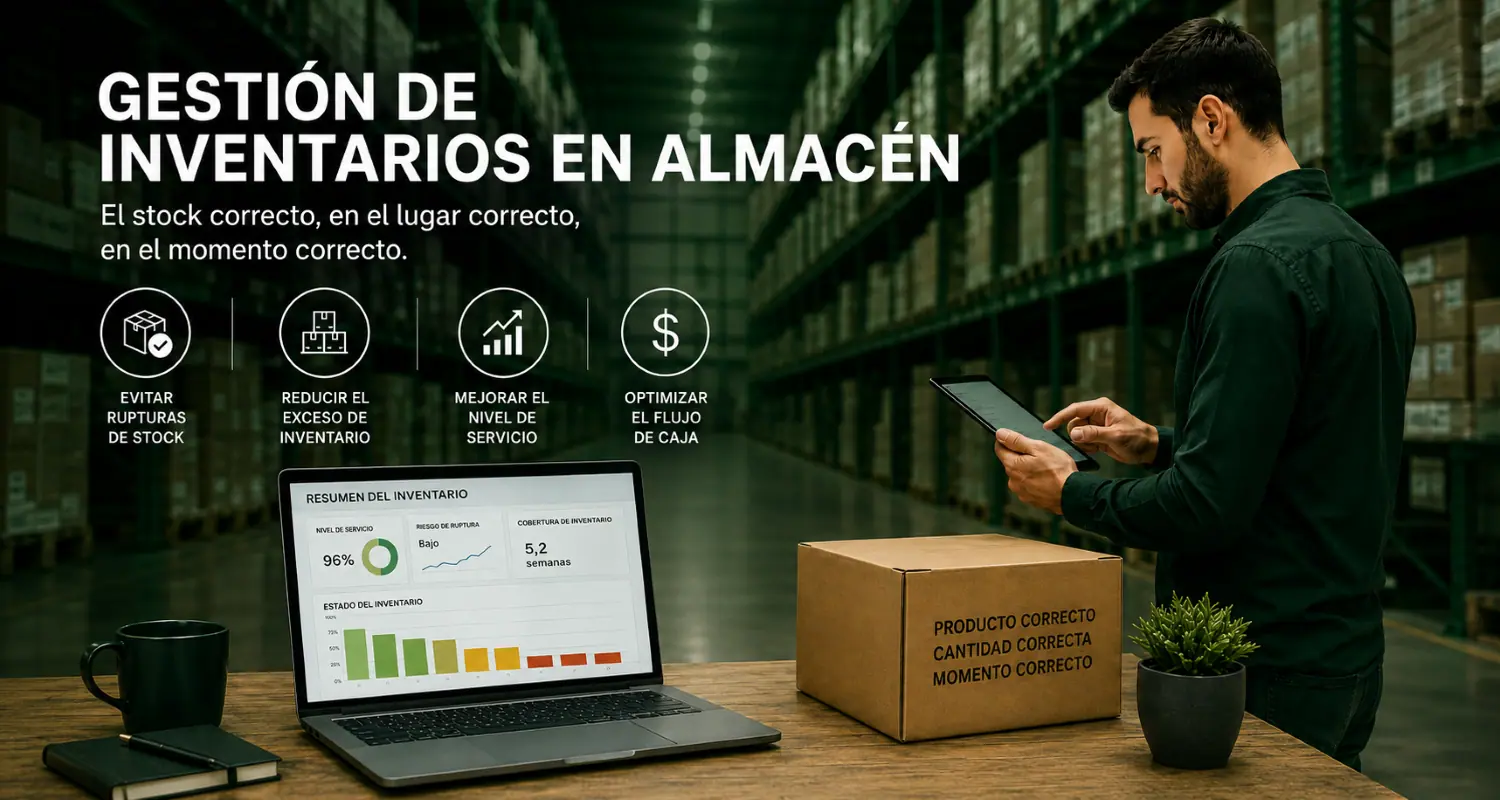
Inventory management is not only about holding less stock. It is about having the right inventory, in the right place, at the right time, without tying up cash in products that do not protect customer service.
In this category, you will find articles on replenishment, stockouts, excess inventory, inventory planning, safety stock, buffers, working capital and the decisions that help planners regain control.
The goal is to help supply chain, operations and finance teams move away from reactive stock management and build a more reliable, demand-driven way to protect service while reducing unnecessary inventory.
Featured article

Gestión de inventarios y reaprovisionamiento
Gestión de inventarios: cómo evitar roturas de stock sin generar exceso de inventario
Descubre cómo mejorar la gestión de inventarios, optimizar el reaprovisionamiento y mantener el nivel de stock adecuado para proteger el nivel de servicio sin inmovilizar demasiado capital.
06/2026
●
Read article
➔
Latest articles
Frequently Asked Questions
What is inventory management?

Inventory management is the process of planning, controlling and optimizing stock levels to meet customer demand while avoiding unnecessary excess inventory. In supply chain planning, it connects availability, replenishment, service levels and working capital.
Why do companies have both stockouts and excess inventory?

This usually happens when inventory is in the wrong place or on the wrong items. A company can have high total inventory while still facing shortages on critical products because planning decisions are not aligned with real demand.
How can companies reduce stockouts?

Companies can reduce stockouts by improving visibility, tracking real demand signals, protecting critical items with buffers and prioritizing replenishment based on risk rather than reacting to every alert the same way.
How can companies reduce excess inventory?

Excess inventory can be reduced by identifying slow-moving stock, adjusting replenishment rules, improving demand visibility and avoiding planning decisions based only on outdated forecasts or budget assumptions.
How does demand-driven planning improve inventory management?

Demand-driven planning helps teams connect replenishment decisions to actual consumption, buffer status and operational priorities. This makes it easier to protect service levels while reducing inventory that does not create value.
Ready to transform your supply chain performance?
See how demand driven planning can improve service, reduce inventory, and free up cash.